Projects
Global Field
My dissertation explores the introduction of a Global Field (GF) mechanism in lightweight neural networks, inspired by population-level brain dynamics such as Local Field Potentials (LFPs). The GF acts as a shared temporal field that integrates activity across a layer over time, providing global context and dynamically modulating neural responses. This approach is tested on temporal benchmarks like sequential and permuted MNIST, the Adding and Copying tasks, and sequential CIFAR-10, with a focus on representational stability, interference resistance, and learning dynamics. Key findings include a 4.6-fold accuracy improvement in sequential CIFAR-10 and the identification of a bifurcation threshold in the GF's inertia parameter, paralleling edge-of-chaos dynamics. The goal is to enable coordination-without-collapse, fostering functional integration in architectures lacking inherent cross-unit communication.
View preprint View report
Wavenet
Trained a WaveNet model to sort iEEG segments into physiological, pathological, artifact, and noise categories using a large annotated dataset from Mayo Clinic and St. Anne’s University Hospital. The model captures both short-range and long-range temporal structure through dilated causal convolutions and residual paths, which turned out to be a strong match for raw EEG. It outperformed earlier CNN and LSTM approaches, held its ground against a Temporal Convolutional Network baseline, and showed particularly sharp performance on noise and artifact detection. Some confusion between physiological and pathological classes remains, which mirrors the clinical ambiguity seen in practice. The pipeline includes dynamic dataset partitioning, normalization, and other steps aimed at making the model generalize rather than memorize.
Brain region identification
This project tackles a long-standing issue in systems neuroscience: figuring out where Neuropixels recordings come from without relying on post-hoc histology. Instead of tracking probe locations through tissue and atlases, I built a data-driven method that classifies brain regions directly from electrophysiological activity. Using the Allen Brain Observatory dataset, I compared classical models with several deep learning architectures trained on spike-train features and PSTHs. Traditional approaches collapsed across animals (accuracy <0.19), while deep models. Especially a Transformer learned reproducible neural signatures across mice (accuracy 0.35, AUC 0.86). Thalamic regions were the most identifiable. The results show that different brain areas carry their own electrophysiological “fingerprints,” making it possible to infer anatomical labels purely from neural responses. This approach could eventually reduce dependence on histology and support less invasive localization strategies in neuroscience research.
View the report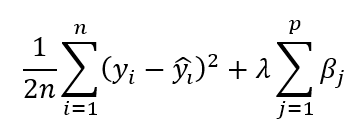
Trauma severity classifier
I have worked on a project to classify trauma severity using EEG and other physiological data. Using various statistical and machine learning methods. The goal of this project was not getting a the best model. Since there are better classifying techniques for that. But to sharpen my mathematical understanding of regression and classifying techniques.

EEG-based comprehension prediction
This project explored whether EEG signals can predict how well subjects understand educational videos. Using 14-channel EEG data and self-reported comprehension scores, I applied both supervised and unsupervised learning methods. Support Vector Machines achieved up to 88.66% balanced accuracy. PCA and K-Means revealed underlying patterns linked to comprehension. The findings highlight EEG’s potential for adaptive learning systems and real-time cognitive monitoring.
View report
DBJJL
What started as a passion project quickly turned into a growing community. I founded the Dutch Brazilian Jiu Jitsu League to bring more structure and consistency to local BJJ competitions. Running the league taught me a lot about organizing events, managing logistics, getting sponsors and building something from the ground up. It was one of the most rewarding things I did outside of academia, driven by a love for the sport and the desire to give back. The league is currently paused, as I moved to Australia